


Sinkhole Damage or Settlement Cracks? What Florida Homeowners Should Know
You’ve noticed a crack in your wall, an uneven floor, or a door that suddenly won’t close properly. If you live in Florida, you might immediately wonder: Is this normal foundation settlement, or could my home have sinkhole damage?
It’s a reasonable concern. Florida’s unique geology makes sinkholes a familiar topic, but not every foundation crack or uneven surface indicates sinkhole activity.
The important thing to understand is that sinkhole damage and ordinary foundation settlement can produce many of the same warning signs. Cracks alone cannot confirm which is responsible. Identifying the cause may require a professional evaluation and, in some cases, specialized geological testing.
Knowing what to watch for can help you determine when it’s time to take the next step.
What’s the Difference Between Foundation Settlement and Sinkhole Damage?
Although both conditions involve ground movement, the underlying causes can be quite different.
Foundation Settlement
Foundation settlement occurs when the soil supporting a home compresses, shifts, or loses some of its ability to support the structure.
Several conditions can contribute to settlement, including:
- Poorly compacted soil beneath or around the foundation
- Changes in soil moisture
- Drainage problems or underground water leaks
- Erosion or gradual compression of supporting soil
- Changes in ground conditions over time
Some minor movement is expected as construction materials and supporting soils adjust. However, significant or uneven settlement can place stress on a foundation and cause structural damage.
Foundation movement doesn’t necessarily involve a sinkhole, but it can still require professional attention.
Sinkhole Activity
Sinkholes develop differently.
Much of Florida is underlain by limestone and other soluble rock. Over time, slightly acidic groundwater can dissolve portions of this rock, creating underground cavities.
As soil moves into these cavities, the ground above may gradually settle or, in some circumstances, collapse suddenly.
According to the Florida Geological Survey, several other conditions can cause ground depressions that resemble sinkholes, including poorly compacted soil, damaged underground pipes, and buried organic material.
This is why a sinking yard, cracked foundation, or settling driveway doesn’t automatically mean a sinkhole is forming.
What Do Normal Settlement Cracks Look Like?
Homeowners frequently notice small cracks in drywall, concrete, or other building materials.
Some cracks result from minor movement, concrete shrinkage, or changes in temperature and moisture.
Examples that may be associated with relatively minor movement include:
- Fine hairline cracks that remain unchanged over time
- Small cracks in drywall without other visible signs of structural movement
- Isolated concrete cracks that aren’t accompanied by sinking or displacement
However, the appearance of a crack alone cannot determine whether it’s harmless.
Even narrow cracks deserve attention if they’re new, continuing to widen, or appearing alongside other changes in the home.
The most useful question often isn’t simply, “What does the crack look like?” but rather, “Is something continuing to move?”
Warning Signs That Deserve a Closer Look
Sinkhole activity and other forms of foundation settlement can produce similar symptoms. While none of the following signs confirms a sinkhole, they may indicate that the ground or structure is experiencing movement.
Cracks That Are Widening or Changing
Pay attention to cracks in foundation walls, interior drywall, exterior masonry, and concrete floors.
Stair-step cracks in brickwork, diagonal cracks near windows or doors, and cracks with visible separation or displacement can suggest movement that deserves further evaluation.
Of particular concern are cracks that continue to grow or return after being repaired.
Doors and Windows That Begin Sticking
When part of a foundation moves, the framing around doors and windows may shift.
This can make doors difficult to latch or cause windows to become harder to open and close.
Florida’s humidity can also affect doors and windows, so this symptom alone doesn’t establish a foundation problem.
However, new sticking or misalignment combined with cracking or uneven floors may warrant closer attention.
Uneven or Sloping Floors
A floor that develops a noticeable slope or changes elevation may indicate movement beneath the structure.
Look for changes such as gaps between flooring and baseboards or cracks appearing in floor tiles.
These conditions can result from ordinary foundation settlement, inadequate structural support, or other underlying problems, including possible sinkhole-related ground movement.
Separation Around the Home
Watch for new gaps where walls meet ceilings, chimneys separate from adjoining walls, or porches and steps pull away from the home.
These changes can indicate that different parts of the structure are moving at different rates.
Depressions or Sinking Areas in the Yard
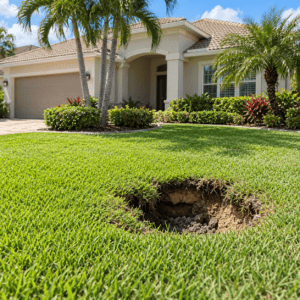
Unexpected changes in the ground surrounding your home can also be important.
New depressions, sinking sections of pavement, unusual ground cracks, or areas where rainwater suddenly begins collecting may indicate changes beneath the surface.
Such conditions can result from drainage problems, buried debris, poorly compacted soil, or sinkhole activity.
The combination of several developing warning signs is a good reason to seek professional guidance rather than assume the damage is cosmetic.
Can You Tell if Your Home Has Sinkhole Damage Just by Looking at the Cracks?
No. There isn’t a particular crack pattern that reliably proves a home has sinkhole damage.
A stair-step crack in masonry, for example, can develop because of ordinary differential foundation settlement. Similar cracking may also occur when the ground beneath a structure is affected by sinkhole activity.
The same applies to sloping floors, sticking doors, and other commonly discussed warning signs.
Determining the cause requires more than identifying visible damage.
A professional foundation evaluation may consider the location and progression of cracks, structural movement, drainage conditions, and the history of the property.
If sinkhole activity is suspected, additional investigation by appropriately qualified professionals may be necessary.
Depending on site conditions, a licensed professional geologist or qualified engineering team may recommend subsurface testing to evaluate the soil and underlying geological conditions.
These investigations help professionals distinguish among possible causes and develop an appropriate repair plan. However, testing has limitations and cannot predict exactly when or where a future sinkhole might form.
What Should You Do if You Notice Foundation Cracks or Possible Sinkhole Warning Signs?
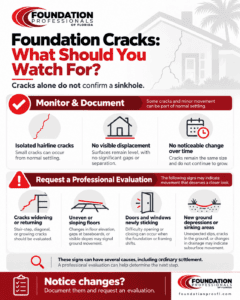
If you’ve noticed changes around your home, a few practical steps can help you respond appropriately.
Document the Damage
Take clear photographs of cracks, gaps, and uneven surfaces. Record when you first noticed the changes and whether they appear to be getting worse.
Photographs taken over time can help demonstrate whether damage is progressing.
Look for Other Changes Around Your Property
Check for related concerns, including unusual drainage, persistent wet areas, new ground depressions, or additional cracking.
Avoid digging into, standing near, or attempting to investigate unstable ground yourself.
Schedule a Professional Evaluation
If cracking is expanding, floors are becoming uneven, or other structural changes are developing, contact a qualified foundation professional.
An evaluation can help identify signs of settlement, determine whether structural support concerns exist, and establish whether additional geological investigation may be appropriate.
Know When the Situation Is Urgent
If a sudden hole opens in the ground, a portion of your home begins rapidly sinking, or serious structural instability is apparent, stay away from the affected area.
Keep others at a safe distance and contact local emergency authorities when there is a risk of injury or collapse.
Homeowners experiencing significant structural damage should also notify their insurance provider promptly. Coverage and investigation requirements depend on the policy and circumstances.
How Foundation Professionals of Florida Can Help
Whether foundation movement involves weakened supporting soil or confirmed sinkhole-related conditions, choosing the right repair begins with understanding the underlying problem.
Foundation Professionals of Florida provides foundation repair, soil stabilization, and sinkhole remediation services throughout its Florida service areas.
Depending on the findings and the recommendations of qualified professionals, potential solutions may include:
Foundation Underpinning
When a foundation is settling because the supporting soil cannot adequately carry the structure’s load, underpinning may be appropriate.
Foundation Professionals offers steel push piers and helical pier installation to help stabilize foundations by transferring loads to suitable supporting strata.
Soil Stabilization and Grouting
When subsurface conditions involve loose soil or underground voids, grouting techniques may help improve support.
Compaction grouting can be used to densify suitable weak soils, while other grouting and void-filling methods may be considered for specific site conditions.
Foundation Professionals also provides sinkhole repair and remediation services when these methods are appropriate for the identified problem.
The selected approach depends on site conditions, the extent of structural damage, and the findings of any necessary engineering or geological investigation.
Experience With Florida Sinkhole Remediation
Foundation Professionals has completed sinkhole stabilization projects involving engineered repair plans and grouting techniques.
For example, the company’s Fort White Fire Station sinkhole repair project involved cement pressure grouting performed as part of an engineer-directed stabilization program.
Projects like this demonstrate why evaluating subsurface conditions and selecting the appropriate repair method are important parts of addressing sinkhole-related damage.
Frequently Asked Questions About Sinkhole Damage and Settlement Cracks
Does Every Foundation Crack in Florida Mean There’s a Sinkhole?
No. Foundation cracks may result from concrete shrinkage, soil settlement, drainage problems, or other forms of structural movement. A crack alone cannot establish that sinkhole activity is present.
Are Stair-Step Cracks a Sign of Sinkhole Damage?
Stair-step cracks in brick or block walls can indicate differential movement, but they aren’t exclusive to sinkholes. They may develop from other settlement conditions as well. Cracks that are growing or accompanied by additional structural changes should be evaluated.
Can a Sinkhole Develop Without Warning Signs?
Yes. Some sinkholes develop gradually and produce visible ground movement, while others can collapse with little warning. The absence of cracks or other obvious symptoms does not guarantee that a property is free from sinkhole risk.
Can Foundation Settlement Be Serious Even if It Isn’t Caused by a Sinkhole?
Yes. Significant or continuing foundation settlement can damage walls, floors, doors, windows, and other structural components. Identifying and addressing the cause is important regardless of whether sinkhole activity is involved.
Concerned About Foundation Cracks or Possible Sinkhole Damage?
Finding cracks around your home can be concerning, particularly in a state where sinkholes are part of the natural landscape.
But not every crack means a sinkhole, and not every settlement problem requires the same repair.
Understanding what’s causing the movement is the first step toward protecting your property and making informed repair decisions.
If you’re noticing widening cracks, sloping floors, sticking doors, or other signs of foundation movement, Foundation Professionals of Florida can help you take the next step.
Contact Foundation Professionals of Florida to request an evaluation and discuss your foundation concerns with an experienced team.


