


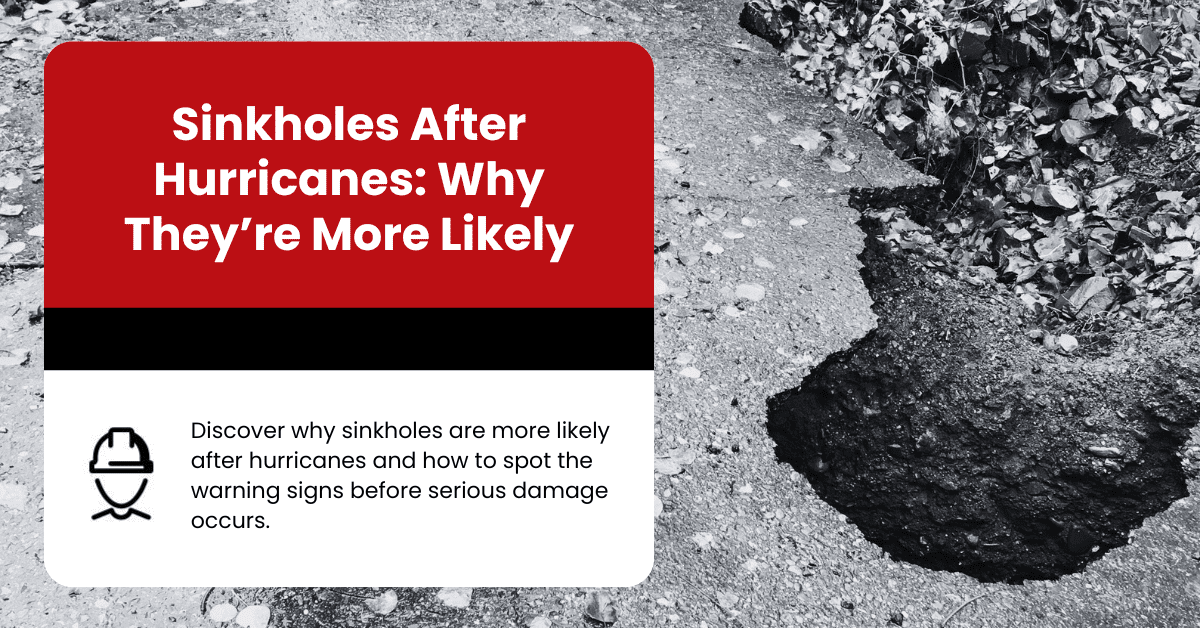
Florida is no stranger to hurricanes or sinkholes. But did you know that these two natural forces are often connected? After a major storm passes, it’s not uncommon for reports of new sinkholes to surface. If you’re wondering why sinkholes seem to follow hurricanes like an unwanted encore, you’re not alone.
Let’s break down why these destructive holes are more likely to form after severe weather and what Florida homeowners need to know to stay safe and proactive.
Hurricanes Bring the Perfect Storm for Sinkholes

Sinkholes form when underground soil, especially limestone, erodes and creates empty spaces that eventually collapse. Hurricanes can dramatically accelerate this process through:
1. Heavy Rainfall
Torrential rain is the most obvious culprit. When huge volumes of water suddenly soak into the ground, it can dissolve limestone faster, flushing away supporting soils and creating voids underground.
2. Flooding
Floodwater doesn’t just sit on top of the ground. It seeps into the soil, raising the water table and pushing loose material into underground cavities. When the water recedes, those spaces are often left unsupported.
3. Soil Saturation
Saturated ground becomes unstable. The more water the soil holds, the heavier it gets — and the more likely it is to collapse into any existing voids below the surface.
4. Drainage System Overload
Storm drains and sewer systems can fail or overflow during hurricanes, washing away additional soil and further weakening the ground.
Areas at Higher Risk Post-Storm
Some regions in Florida are especially vulnerable to sinkholes, especially after a hurricane:
-
Central Florida, including Pasco, Hernando, and Hillsborough counties
-
Areas built on limestone bedrock (which dissolves easily)
-
Neighborhoods with a history of sinkholes
Even if your home has never had a sinkhole issue, a nearby collapse can affect the surrounding land, including yours.
Warning Signs to Watch For After a Hurricane
If your area has just weathered a major storm, keep an eye out for early sinkhole warning signs like:
-
New cracks in walls, floors, or ceilings
-
Sloping floors or stuck doors/windows
-
Depressions forming in your yard
-
Tilting trees or fence posts
-
Unusual soft spots in the ground
What to Do If You Suspect a Sinkhole
-
Stay away from the area, especially if the ground feels unstable.
-
Contact your county emergency management office or a geotechnical expert.
-
Document any damage with photos or videos.
-
Notify your homeowner’s insurance provider.
Prevention and Inspection
If you live in an area prone to sinkholes, it’s worth considering:
-
A geotechnical inspection, especially after major storms
-
Soil stabilization services, if vulnerabilities are found
-
Proper drainage management to keep water away from your foundation
Final Thoughts
While sinkholes might seem sudden and random, there’s almost always a buildup beneath the surface — and hurricanes can be the tipping point. If your property has experienced flooding, heavy rain, or shifting soil after a storm, don’t wait for a collapse to take action.
At Foundation Professionals of Florida, we specialize in identifying risks and providing long-term sinkhole repair solutions. If you’re concerned about your foundation or soil stability, get in touch with our team for a professional evaluation.
