


Imagine building your dream home on a sloped lot or fixing up an old basement wall that is starting to bow. It would help if you had a reliable and cost-effective solution. This is where helical tiebacks come in – a modern, innovative method for stabilizing foundations and walls. These handy devices are like the unsung heroes of the construction world, quietly ensuring everything stays in place. How are they practical, and why are they the ideal choice in these scenarios?

Understanding The Importance of Helical Tie Backs
Helical tiebacks are essentially long steel rods with screw-like plates—called helices. Imagine a giant corkscrew designed to be driven deep into the ground. These tiebacks act as anchors, securing structures by distributing their weight across a wide area. When the ground shifts or pressure builds up, these anchors hold everything steady, preventing damage.
Helical tiebacks are used in residential and commercial projects, including retaining walls, basements, and foundations. They are suitable for all soil types and can be adapted to work in various soil conditions. With proper installation and maintenance, they can provide stability for many years. They are cost-effective, easy to install, versatile, and environmentally friendly, offering long-term support.
Foundations and walls can move or crack over time in areas where the soil isn’t exceptionally stable, and it is prevalent in hilly regions or places with loose soil. Helical tiebacks provide a critical solution by reinforcing these structures. They help manage the lateral pressures exerted by soil, keeping walls from leaning or bowing and foundations from shifting.
Common Misconception about Helical Tie Backs
Some believe helical tiebacks are only suitable for specific soil types or temporary fixes. However, they work well in various soils and provide long-lasting support when properly installed. They’re a versatile, reliable solution for many stabilization challenges.
Features of Helical Tie Backs
Each helical tieback is made up of a few essential parts:
- Steel Shaft: The central rod is driven into the ground.
- Helical Plates: These screw-like plates are welded onto the shaft.
- Connection Point: This part secures the tie back to the structure, like a basement or retaining wall.

Materials Used in Helical Tie Backs
Helical tiebacks are typically made from high-strength steel to withstand significant loads. The helices are welded securely to the shaft, ensuring they don’t move out of place. In some environments, coatings are applied to prevent corrosion, extending their lifespan.
How Helical Tie Backs Work
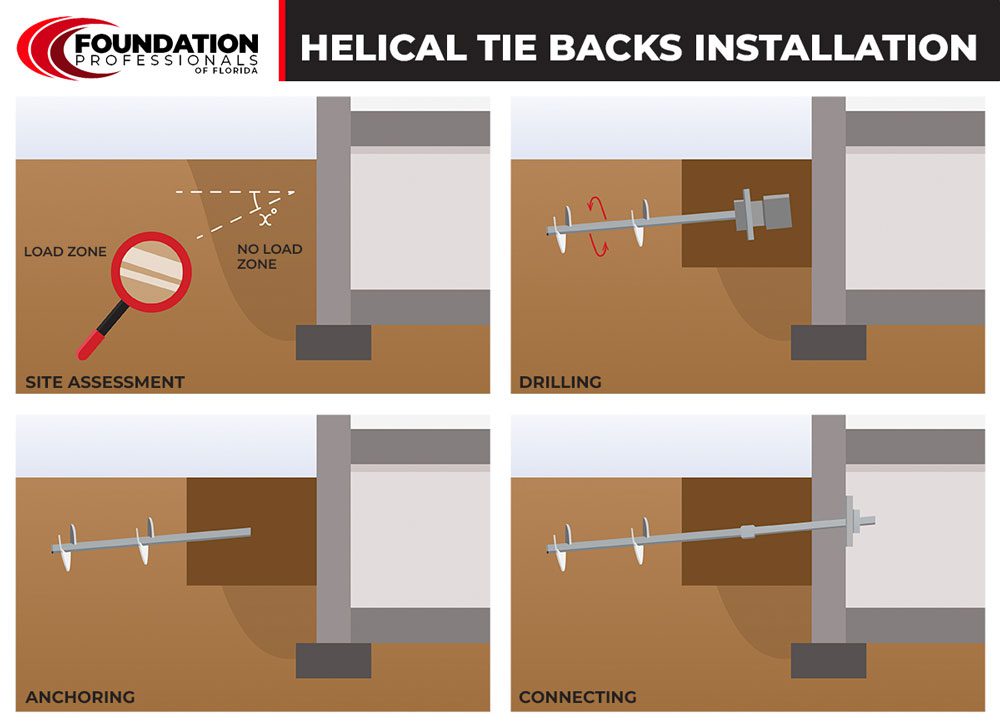
Installing helical tiebacks starts with turning the steel shaft into the ground at a specific angle until it reaches stable soil. The helical plates dig into the soil as the shaft is screwed in, creating a firm anchor. Once in place, the tieback is connected to the structure, applying tension that counteracts any external pressure from the soil.
The design and application of helical tiebacks are grounded in solid engineering principles. Factors such as soil type, load requirements, and environmental conditions are analyzed to ensure effective tiebacks. Engineers use advanced tools to model and plan the best approach for each project.
Helical tiebacks must meet various regulations and standards to ensure safety and effectiveness. These cover material quality, installation processes, and performance criteria. Adhering to these standards is crucial for achieving the desired outcomes and ensuring long-term stability.
The future of helical tiebacks looks promising, with ongoing innovations enhancing their performance. Advances in materials and installation techniques are making them even more efficient. Engineers are also developing new models to predict their behavior under different conditions better, leading to more tailored solutions.
Common Problems Addressed by Helical Tie Backs
Helical tiebacks are designed to tackle several common issues, such as:
- Soil Erosion: Providing stability in areas prone to erosion.
- Lateral Earth Pressure: Counteracting the pressure that pushes against walls.
- Settlement: Preventing structures from sinking or shifting unevenly.
Applications of Helical Tie Backs
Helical tiebacks are versatile and can be used in various scenarios, such as:
- Stabilizing Retaining Walls: Preventing walls from tipping or collapsing.
- Reinforcing basement walls: Keeping walls from bowing inward due to soil pressure.
- Supporting Foundations: Preventing foundations from shifting or settling unevenly.
- Slope Stabilization: Securing slopes to prevent landslides.
Helical Tie Backs in Seismic Zones
In areas prone to earthquakes, helical tiebacks offer crucial support. They help anchor structures more securely, mitigating the risk of damage during seismic activity. This makes them an essential consideration in earthquake-prone regions.
Advantages of Using Helical Tie Backs
Helical tiebacks offer unique advantages compared to driven piles or concrete anchors. They’re less invasive, require less digging, and often install quicker, making them a more practical and affordable option for many projects.
Once installed, helical tiebacks require minimal maintenance. Regular inspections ensure they remain effective, and in most cases, they provide long-term stability. With proper care, these anchors can last for many years, supporting the structures they’re designed to stabilize.
Costs can vary depending on the project size, soil type, and installation depth. However, due to reduced labor and quicker installation times, they generally offer cost savings over more traditional methods. Consulting with a professional can help provide an accurate estimate.
Helical tiebacks are a greener option than many other stabilization methods. They require minimal excavation, which reduces soil disturbance and the overall environmental footprint. Their durable materials also mean fewer replacements, contributing to sustainability.
There are several reasons why helical tiebacks are a popular choice:
- Quick Installation: They can be installed faster than many other methods, with less disruption.
- Cost-Effective: Fewer labor and equipment needs translate to lower costs.
- Versatile: Effective in different types of soil and various structures.
- Environmentally Friendly: Less excavation means less environmental impact.
- Durable: Made of high-strength steel, they provide long-lasting stability.
Professional Installation Process of Helical Tie Backs
Proper installation is crucial to the effectiveness of helical tiebacks. Working with experienced professionals who understand the process’s intricacies is essential. A qualified contractor will assess the site, design a suitable solution, and ensure everything is installed correctly, providing peace of mind and reliable results.
They are drilled into the ground at an angle until they reach stable soil, then connected to the structure to provide support. Installing helical tiebacks involves:
- Site Assessment: Determining the optimal angle and depth for installation.
- Drilling: Using a machine to screw the steel shaft into the ground.
- Anchoring: The helices secure the shaft as it’s driven deeper.
- Connecting: Attach the tie back to the structure to ensure it holds firm.
The Future of Foundation Stabilization with Helical Tie Backs
Helical tiebacks are a modern, reliable foundation and wall stabilization solution. Their ease of installation, cost-effectiveness, and durability make them a go-to choice for many construction projects. These anchors will remain a cornerstone of safe and stable building practices as technology and techniques evolve.
If you live in North or Central Florida and are worried about stabilizing foundations and walls, contact Foundation Professionals of Florida. We offer free inspections and estimates so you can get expert advice without any commitment. Taking care of your place now means enjoying a sturdy, comfortable home for years.
