


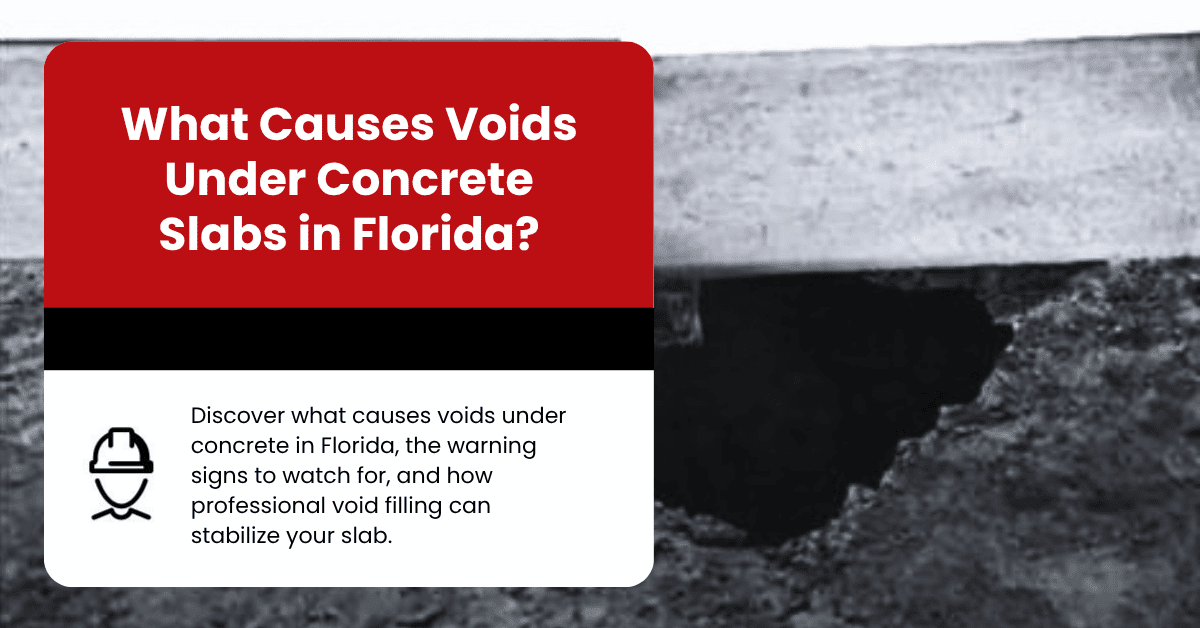
Concrete slabs are designed to provide a stable, long-lasting surface—but when the soil beneath them shifts or erodes, empty spaces (known as voids) can form. Over time, these voids can lead to sinking concrete, cracking, and even structural concerns.
In Florida, unique soil conditions and environmental factors make voids under concrete slabs especially common. Understanding what causes these voids is the first step toward preventing costly damage—and knowing when to act.
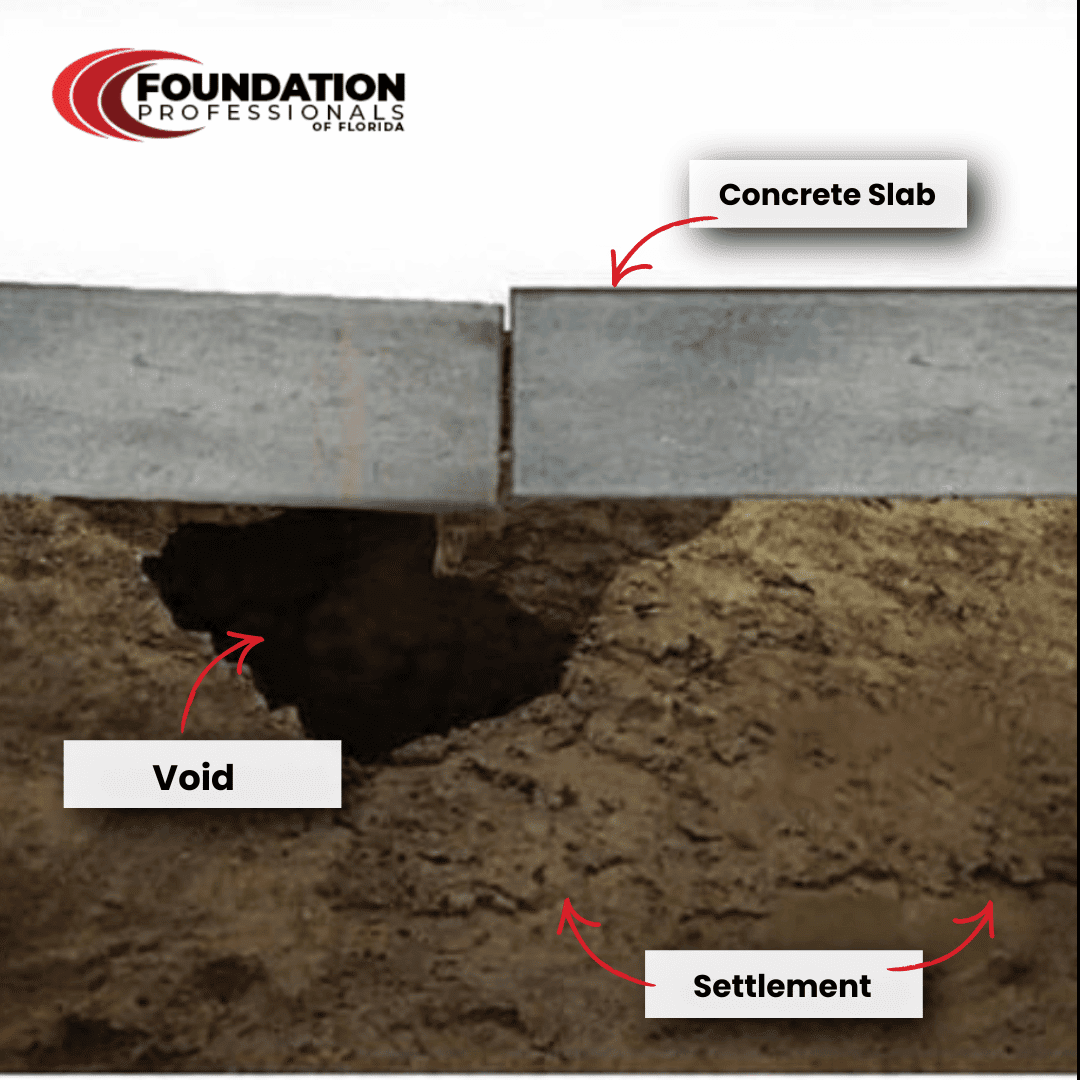
What Is a Void Under a Concrete Slab?
Soil Erosion from Water Intrusion
One of the leading causes of voids in Florida is water getting beneath the slab.
Heavy rains, poor drainage, or plumbing leaks can wash away the soil supporting your concrete. As the soil erodes, gaps begin to form underneath the slab.
Why it’s especially common in Florida:
- Frequent rainstorms
- High water tables
- Sandy soils that are easily displaced
Poor Soil Compaction During Construction
If the soil wasn’t properly compacted before the concrete was poured, it can settle over time.
As the loose soil compresses, it leaves behind empty spaces beneath the slab.
This is common in:
- New construction homes
- Recently poured driveways or sidewalks
- Areas where fill soil was used
Underground Utility Work and Trenching
Modern infrastructure often requires trenches for:
- Water lines
- Sewer systems
- Electrical or cable lines
If these trenches are not properly backfilled and compacted, the soil can shift and settle—creating voids beneath nearby concrete.
This has become more common in the last decade as underground utilities expand in residential and commercial areas.
Natural Soil Settlement
Even without outside interference, soil naturally settles over time.
Florida’s sandy and loosely compacted soils are particularly prone to movement, which can gradually create voids beneath slabs.
Drying and Shrinking Soil
While Florida is known for moisture, certain conditions can cause soil to dry out and shrink.
When this happens, the soil pulls away from the slab, leaving gaps behind.
Tree Roots and Organic Material Decomposition
If organic materials (like roots, wood, or debris) were buried beneath the slab during construction, they will eventually decompose.
As they break down, they leave behind empty spaces—creating voids that can lead to slab instability.
Signs You May Have a Void Under Your Concrete
Voids often go unnoticed until visible damage begins. Watch for these warning signs:
- Cracks forming in concrete
- Uneven or sinking slabs
- Water pooling in certain areas
- A hollow sound when tapping the surface
- Slabs that feel unstable or “rock” slightly
Catching these signs early can help prevent more extensive damage.
Why Voids Under Concrete Shouldn’t Be Ignored
A small void can quickly turn into a larger problem.
As the slab loses support, the weight of the concrete can cause it to:
- Crack
- Sink further
- Shift out of level
In some cases, voids near foundations can contribute to structural issues if left untreated.
How Void Filling Solves the Problem
Void filling is a process used to stabilize concrete by filling the empty spaces beneath it.
Using high-density polyurethane foam, professionals inject material beneath the slab. The material expands to fill the void, restoring support and preventing further movement.
Key advantages of polyurethane void filling:
- Requires smaller, fewer drill holes
- Expands quickly to fill gaps (within seconds)
- Lightweight but high-strength
- Minimal disruption to surrounding areas
- Long-lasting—does not lose density over time
This method is a faster, less invasive alternative to removing and replacing concrete.
When to Consider Professional Void Filling in Florida
If you’re noticing early signs of settlement or suspect a void beneath your concrete, addressing it sooner rather than later can save time and money.
Professional evaluation can determine:
- The size and location of the void
- Whether stabilization or lifting is needed
- The most efficient repair method
Protect Your Concrete Before the Problem Gets Worse
If you suspect a void beneath your concrete slab, don’t wait for the damage to get worse. The team at Foundation Professionals of Florida has the experience and specialized equipment to accurately assess the problem and provide a fast, effective solution. With advanced polyurethane void filling techniques, we can stabilize your concrete with minimal disruption and long-lasting results. Contact Foundation Professionals of Florida today to schedule an evaluation and get expert guidance on the best way to protect your property.
